This 2020 book was written by a British Paleolithic archaeologist.
There has been a renaissance in Neanderthal research over the last three decades with technological advances like genome sequencing that allow us to gain information from sources we couldn’t before. In this book, Sykes covers the most important findings from that research.
Sykes makes the case that rather than a dead-end stop on the way to real humans, Neanderthals were denizens of a world “as wide and rich as the Roman Empire”. Neanderthals endured for an astonishing 350,000 years, until we lose sight of them - or, at least their fossils and artefacts - somewhere around 40 ka.
Physiology:
It was initially thought that Neanderthal brain volume was slightly larger than ours, but this turns out to be due mostly to the fact that most Neanderthals we’ve found are male, unclear why, but their brains are similar in size to males today. “Though they shared our massively inflated brains relative to other hominins, Neanderthal skulls are shaped very differently. Lower crowns gave them a more aerodynamic, sculpted look, finished by an obvious bump just above the neck. Larger and deeper-set eyes gazed out from a face whose nose and mouth seemed pulled forwards, but with swept-back cheekbones. Framing all this were magnificent arched brow ridges.”
They also had huge noses, probably mostly to condition cold, dry air on the way into the lungs. They could probably breathe in air at twice the rate we can now. They also lived intensely physical lives. “Neanderthals had to balance conflicting needs: more massive bodies coped better with their intensive lifestyles, but needed a lot of fuel. And extra calories require more oxygen to convert into energy. Therefore, respiratory efficiency became crucial, exemplified by huge noses siphoning in air and larger chests to accommodate more capacious lungs: every breath they inhaled was deeper.”
“With reinforced foot arches to cope with their greater bulk, sprinting and especially endurance running would have been less efficient. Perhaps Neanderthals might have lost to any H. sapiens in a 5,000m track race, but on the other hand their Achilles tendons made them much more sure-footed on uneven ground.”
They were also mostly right handed, their right sides were 25-60% more developed than right side, and we know from uneven wear on lithics and other artifacts. “They possessed huge strength when grasping in the palm, and big muscles combined with large finger tendons ensured a steely grip. Their odd-looking wide fingertips - probably visible in the flesh - were likely adapted to hold things extremely tightly, with only a minimal loss of precision for very fiddly tasks.”
They likely needed 3500 - 5000 calories per day, given the climate, their size, and physical activity levels.
Social organization:
“intriguingly in general Neanderthal women don’t display asymmetry between right and left arms like the men. Whatever they were doing with their lower arms, it mostly involved both hands…Neanderthal women have a higher frequency of chipping damage on their lower front teeth, while in men it’s on the upper set. There aren’t any ethnographic clues for how these particular asymmetries were produced, but since these patterns are roughly similar across Western European sites, we might be looking at widespread commonalities in activity organisation.”
In terms of lifespan, several middle-aged or older Neanderthal skeletons have been found, like the Forbes woman. Accurately identifying bones from individuals over 50 years old is tricky due to methodological constraints and the fragility of older bones.
Many Neanderthals have been found with brutal injuries, including young children, but its unclear how they were inflicted. But in many cases, individuals grew to advanced ages with terrible injuries, implying social care. The huge numbers of injured Neanderthals could mean sick or injured individuals came into caves to die, it could also be reflective of caves themselves being dangerous to live in, especially with inside fires destabilizing the surrounding rock.
“But it’s Shanidar 1 who is the most convincing case for long-term support. Probably partially blind, certainly deaf in at least one ear, with hugely reduced mobility and a chopped-off arm, he nevertheless endured to a ripe old age, even adding arthritis to his aches and pains.”
“Total population estimates tend to be in tens of thousands or even less. At any point in time there may have been fewer Neanderthals walking about than commuters passing each day through Clapham Junction, London’s busiest train station.”
“For all their cleverness, flexibility and resilience, the archaeology does suggest they had weaker and smaller social networks made up of small groups that rarely came together in large gatherings.”
And they didn’t have “Shared symbolic networks reflecting connections with far-flung communities.”
Climate:
“over the full span of time between around 400 to 45 ka, contrary to the clichés, Neanderthals actually lived through more interglacials than glacials.” Within this time period, drastic transformations in temperature, environment and even sea level sometimes happened over the span of a human lifetime.
Neanderthals in the Alps, Carpathians and other mountain ranges were climbing at least up to 2,000m (6,500ft).
“The only sort of country in western Eurasia lacking evidence so far for Neanderthals is true wetlands. To do more than briefly visit such places, serious investment in either watercraft or raised structures like trackways and platforms is needed.”
“Since the current interglacial began around 12,000 years ago, we’ve largely basked in the kind climates of a world where ice caps are dormant. Without the Industrial Revolution there probably would have been a few thousand more golden years before the mercury began juddering downwards. Instead, the massive release of CO2 - outstripping anything from the entire Pleistocene and beyond - has delayed the next ice age indefinitely.”
Technology:
Neanderthals developed a way of knapping in the middle Paleolithic known as Levallois (about 250 ka). “it further developed the conceptual division of stone blocks, with cores treated as two halves. By shaping the base and preparing special side zones to be struck, it was possible to guide how flakes came off the upper surface, controlling their shape and size.” They were also becoming much more selective about materials around this time, and especially valued flint.
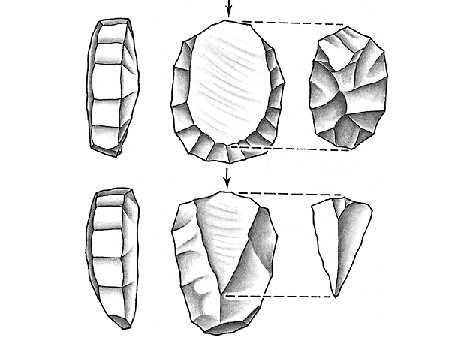
Discoid was another invention: “Discoid, it turns out to be a masterclass in economy. The cores need only a few initial preparatory flakes to create a decent knapping angle, and every flake thereafter is the ‘good stuff’: sharp but easy to handle and ready-to-use. What’s more, each removal creates the surface for the next strike, with no need to stop and refashion the surface.”
At a site called Schöningen, tapered spears dated to between 337 and 300 ka show that Neanderthals fashioned tools. Possibly even composite tools, we know they made birch tar, and some residues suggest it was used to attach wooden handles to stone heads. Some wooden pieces also show evidence of attachment to stone heads via wedging. Some wearing patterns on tools suggest that they were binding using plant fibers or animal sinew. It’s possible they were also making tools or weapons out of bone, but this is controversial.
In terms of adhesives, by 50 ka, chemical purity of residues indicates they were making refined birch tar, and also mixing it with beeswax to improve consistency.
Language:
Really hard to find direct evidence, but given complexity of some of their technologies, like very specific knapping, adhesive recipes, and division of labor, it seems like some type of organized communication was happening. But it does seem like Neanderthal throats could make pretty much the same range of sounds as ours.
They also have the same FOXP2 gene as us, and different from our closest primate relatives, but it may have been expressed differently.
Hunting and gathering:
Predator gnaw marks are often found above Neanderthal cut marks, indicating Neanderthals had primary access to carcasses, making them excellent hunters of big and small game.
“Carbon and nitrogen isotopes from hominin bones can give an idea of where they fitted into local ecosystem food chains, and on the whole Neanderthals resemble carnivores like wolves or hyaenas with high nitrogen…Isotopes can also give an idea of predator diet niches - who was eating what - and remarkably, some Neanderthals, including those at Spy, appear to have been getting between 20 and 50 per cent of their animal protein from mammoth.”
“study after study show that Neanderthals were consistently organising hunting around marrow and fat: the animals targeted, the extent of butchery and what was brought back.”
They were likely also preserving animals. “Even if we assume meat was shared with others waiting at places where game was transported, the hundreds or thousands of kilograms of flesh at places like Schöningen [Germany] do seem rather too much to have used before spoiling. Given the risk and energy outlay from tackling big beasts and transporting the heavy joints, it would make sense if Neanderthals had some way to store or preserve their surplus.”
Contrary to what was initially thought, Neanderthals weren’t carnivores, they ate plants when they were available. Digging sticks are good evidence of this. Neanderthals found in warmer climates have wear patterns highly suggestive of a diet comprising a lot of abrasive plant material. Mineralized calculus on ancient teeth also supports this idea. Grasses and waterlily root have been found in Spy (France) Neanderthals. In development now is sequencing DNA found in calculus, but that’s still a nascent technology. They may even have been cooking the plants.
“Calculus studies back this up: some at El Sidrón [NW Spain] contained heat-cracked starches, and 40 per cent of the starches from the Shanidar 3 [Iraq] individual appeared to have been boiled.”
Fire:
It’s agreed that Neanderthals used fire, and hearths became increasingly common going into the Middle Paleolithic. From about 120 ka fire was obviously part of everyday life. But the question of whether Neanderthals simply scavenged it or could produce it is, perhaps surprisingly, still debated. For example, hearths are not found during one of the coldest glacial periods they survived, which supports the idea that they were scavenging fire, since wildfires would be less common in a glacial period. But it’s also possible they were just using fire outside of caves, which wouldn’t have left a trace. Abric Romaní (Catalonia) Neanderthals were controlling airflow into pit hearths by digging small trenches. Brown coal has also been found.
They may have used fire to do controlled burns of the landscape. In In the Neumark-Nord (Germany) sediments, just as Neanderthal lithics become visible, there’s a sharp spike in charcoal particles: 10 times background levels. The pollen shows more sun-loving species too, like blackthorn and hazel. What’s difficult to tell is whether this was natural burning creating a landscape attractive to Neanderthals, or if they were the fire starters.
Lifestyle:
Large trash middens at places like Kebara (Israel) indicate Neanderthals were disposing of their rubbish in designated places.
Some areas contain remnants of what was likely hides lashed to poles, creating living structures.
Artifacts made from materials from over 60 miles away indicate that Neanderthals sometimes traveled far distances and carried things back.
“synchronous activity areas, multiple fires and especially rubbish dumps in places like Abric Romaní or La Folie point to between 10 and 20 individuals. In other words, the size of a typical [modern hunter-gatherer] band.”
Looking at the presence of some elements like lead in tooth enamel of developing Neanderthals indicates they may have travelled seasonally.
Many artifacts show smooth polishing, likely indicating rubbing of hides. Indeed, “thermal modelling shows that unless they were super-fat and thickly furred like bears, fitted clothing of some sort was vital… What makes the production of clothing especially likely beyond Neanderthals’ physiology is the multiple lines of evidence for massive processing to soften and stretch hides, notably seen in their clamping and probably also chewing tooth wear.”
“Neanderthals probably had pair-bonded sexual relationships; at least, mostly. That means that, unlike many other primates, parenting was more likely a shared task, and adult partnerships were long-term affairs.” I didn’t think the author provided any good evidence that was the case though.
Their infants went through similarly timed developmental milestones as ours.
Art:
Residues of various pigments have been found in containers like stalagmite crusts (unclear if natural or manufactured containers) and artifacts like shells have been found coated in pigment. They were interested in applying color to unusual things.
We know that already between 250 and 200 ka Neanderthals were making liquid red ochre. Later, they also seem to have been color mixing.
There are also design cut marks on bones, like fan shaped patterns that have no apparent butchery purpose.
Mathematics:
“The Pradelles hyaena bone is even more exceptional. On a surface just 5cm (2in.) long, a Neanderthal made nine parallel incisions, with extremely similar shapes. All cut in the same direction with a single tool and probably at the same time, the final mark looks to have been crammed into the narrowing width of the bone, as if its inclusion was more important than the overall appearance. Then it gets weird: near the third line’s base is a further set of eight minuscule paired nicks, each set intersecting at their origin points… Rather than an ordinal ‘1 to 100’ understanding, it’s possible Neanderthal numeracy was based in sets, like tally systems.”
Death:
“Despite advances in the past three decades, and even a newly discovered skeleton, understanding what mortality meant to them is still controversial.”
Regarding the Old Man at La Chapelle-aux-Saints, there are several features that indicate purposeful burial, including the fact that the neck vertebrae were unaffected, implying that the remains were already partly supported by sediment before they rotted, otherwise the head would have tumbled off.
Also, young infants are often found rolled onto their sides, before they’re old enough to do that on their own, and there are no gnaw marks from rodents or predators.
Neanderthal remains at many sites did show signs of butchery and cannibalism, using similar techniques, but not always the same patterns as for other animals, including which bones were kept etc. The reason may have actually been a way of processing grief, rather than starvation or violence, butchered bodies don’t seem to have higher rates of violent death. “Bonobos once again provide an intriguing counterpoint. There are no recorded infanticides, yet several cases of mother-infant cannibalism exist, which also featured meat sharing.” Another case exists of a chimp in a Zambian sanctuary picking her dead son’s teeth with a grass blade. “skills in carefully taking apart hunted carcasses might be transposed into a grieving process that involved butchery and cannibalism as acts of intimacy, not violation.”
“How they dealt with their trauma was diverse, and included depositing bodies, as well as taking them apart and bringing their raw components back into life via consumption, using them as tools, or marking them in special ways. By focusing on burials as the best measure of mortuary meaning, we devalue the uniquely Neanderthal ways of doing things.”
But spectacular grave goods are a Homo Sapiens phenomenon.
DNA evidence:
The first Neanderthal DNA was sequenced in 1997, but only mDNA could be extracted at that time.
But later “results have revealed a deep structure within the Eurasian Neanderthal population as a whole. Two main branches split, then remained isolated in Europe and Asia for millennia. Moreover, the Altai woman’s descendants, sort of like long-lost cousins of all the other Neanderthals, had apparently disappeared and later been replaced by a twig stemming from the European branch. Just as with the mtDNA in Europe, it seems that at a regional scale, multiple nuclear DNA lineages existed that were either contemporary but not mixing much, or quite rapidly replaced each other.”
“All this implies that there were continental-scale movements of lineages, certainly towards the east, but also perhaps in the other direction. This was likely to be an incremental process rather than anything like modern notions of migration, but the fact that it happened at all points to enormous, long-term upheavals.” Seems unsurprising given how much the climate changed during the time the Neanderthals were alive.
DNA sequencing also revealed an entirely unknown Hominin group, the Denisovans, from a single fingertip that had DNA that didn’t match any known Hominin group. “They extend at Denisova from around 50 to 150 ka, but as a population diverged from Neanderthals before 600 ka.” They were likely an Asian species, and definitely interbred with Neanderthals. One individual found actually had a Neanderthal mother and a Denisovan father.
“The oldest H. sapiens skulls, pretty much like extant humans, date to around 200 to 150 ka in East Africa, around the same time that ‘classic’ Neanderthal anatomy was also coalescing.”
“Western Europeans tend to have the least [Neanderthal DNA] - 2 per cent or under - while Indigenous Americans, Asians and Oceanians, including Aboriginal Australians and Papuans, have up to a fifth more.” Most of this gene crossing happened between 77 and 55ka, but there appear to have been several interbreeding periods.
“so far we’ve sampled fewer than 40 Neanderthals - and have only 3 high-coverage genomes - from among the thousands of skeletal parts in museums, representing hundreds of individuals.”
“the highest resolution for individual radiocarbon measurements is around 500 to 2,000.”
“Modern zoology’s concept of allotaxa may be more appropriate for what Neanderthals were to us: closely related species that vary in bodies and behaviours, yet can also reproduce. Yaks and cattle are an example.”
“Parisians, Londoners or Berliners today with ostensibly European heritage have very little connection even to Mesolithic people just 10,000 years ago. The vast majority of their DNA comes from a massive influx of Western Asian peoples during the Neolithic. This means that many of the first H. sapiens populations are more extinct than the Neanderthals; not a great sign of evolutionary dominance… Put together, this means the notion that H. sapiens populations arrived only very late and, like an invading army, entirely replaced Neanderthals cannot be the case. Instead, something much more complicated was happening, including the extinction of almost every early H. sapiens population. Despite this, H. sapiens still tend to be framed as inherently superior.”
Future
The author states “biological experimentation splicing Neanderthal genes into mice has already begun, while ‘Neanderthalised’ frogs have been studied to determine if they experience pain differently… Neander-oids: small clumps of gene-edited human brain cells. Taking nine months to grow, they’re not true brains, lacking consciousness or known processing capacity.” But that the research has not been published yet, so it is happening in the dark. I found no evidence of any of this.
General background:
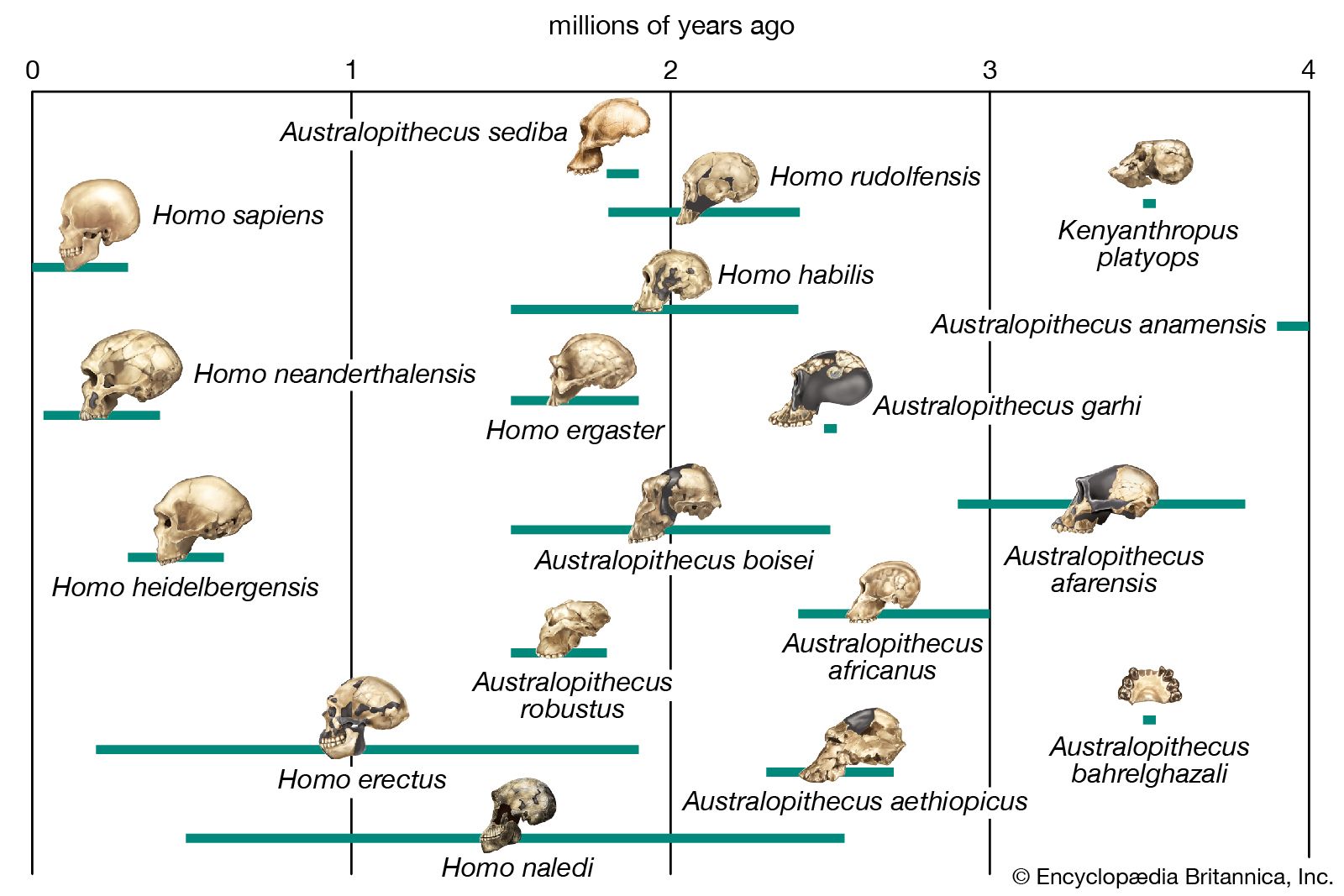
The Middle Paleolithic broadly spanned from 300,000 to 30,000 years ago. The Middle Paleolithic was succeeded by the Upper Paleolithic subdivision which first began between 50,000 and 40,000 years ago. The Upper Paleolithic (or Upper Palaeolithic) is the third and last subdivision of the Paleolithic or Old Stone Age. Very broadly, it dates to between 50,000 and 12,000 years ago.
Anatomically modern humans (i.e. Homo sapiens) are believed to have emerged in Africa around 300,000 years ago, it has been argued by some that their ways of life changed relatively little from that of archaic humans of the Middle Paleolithic,[2] until about 50,000 years ago, when there was a marked increase in the diversity of artefacts found associated with modern human remains. This period coincides with the most common date assigned to expansion of modern humans from Africa throughout Asia and Eurasia, which contributed to the extinction of the Neanderthals.
Thought questions:
- The author seems to take an approach of, if it’s possible they did this, lets assume for now they did. What do you think are the advantages and disadvantages to being conservative vs optimistic about what Neanderthals may have done, given how sparse the data is?
- In the meeting, we talked abut a proposed project for a woman to be a surrogate for a Neanderthal baby. What do you think of this proposal? Do you think a Neanderthal baby brought up in modern society would be noticeably different from modern children?
- After reading the book, how do you feel your previous conception of Neanderthals has changed? Do you now feel more or less of a distinction between Homo Sapiens and Neanderthals?